Trailer characteristics
Art Style
Animation
Game-play
Responsiveness
Narrative
Color
Style
Audio
Music
SFX
Foley
Voice
Interactivity
User Experience
Accessibility
Contents
Culture
Ethics
Social Issues
Representation
Religion
Politics
Historical Events
(1)Selected Trailer – The Revenant
The director of the movie described the theme of his film being primarily based on survival and spirit which rose through physical pain, he told the actors they were “going to be in pain and that he planned to film it”. He made sure he had them immersed in the wilderness, he had them surrounded by it. This was because any false moment would cause everything to fall apart.
The opening scene begins with a character frantically running through a forest, the camera angle is low to the ground and is ahead of the man running, rifle in hand, you can tell from that he is running from someone or something,as he’s seemingly checking behind himself as he sprints. This suspense is then built upon as the footage is pieced with the drums beating in increasing tempo, the music gives the scene a deeper sense of emotion, preparing the audience for the action which is coming as the suspension builds. It then cuts to horses riding into what seems like an attack on a camp or base. Its only as the drums come to an end that we hear the first voice line of the trailer. It’s the character from the opening scene yelling “get the boat, move!”. This dialog alone infers that this character is in command of his men as they all follow his order, running towards the last boat left during the ambush. As the camera focuses on the boat we can see and hear rifles and bows firing at each other. If you pay enough attention to detail, then its clear that the men carrying bags and bundles of furs onto the boats as the scramble aboard.
The colour pallet throughout the trailer doesn’t really change, it consists of dark browns, green and grays with the only bright colours being either the snow, sky or campfires. This was mostly down to the time the film was set (early 19th century) and the location it was set in. The costumes the men are wearing seem to be all the same colour. Brown. Whether this is because of the nature of their job being fur trappers or the muddy forests they camp in.
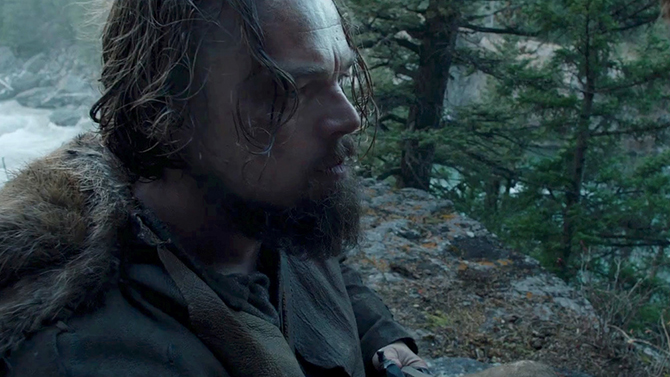
The events of the movie take place in 1823, in Montana and South Dakota. We know that the movie is inspired by real events, as mentioned in the final part of the trailer. The movie is based upon the story of Hugh Glass, an American fur trapper and explorer in the early 19th century. The territory was inhabited by indigenous people, and the French and English, it had very little laws and rules. This land became the interest for the fur trapping trade, which was a massive sauce of income, it worked as the ‘pre gold-rush’ in a lot of ways.
The premise of the film is revenge, it follows Glass 1500 miles through the wilderness in pursuit of the men who left him for dead after he was mauled within an inch of his life by a bear.
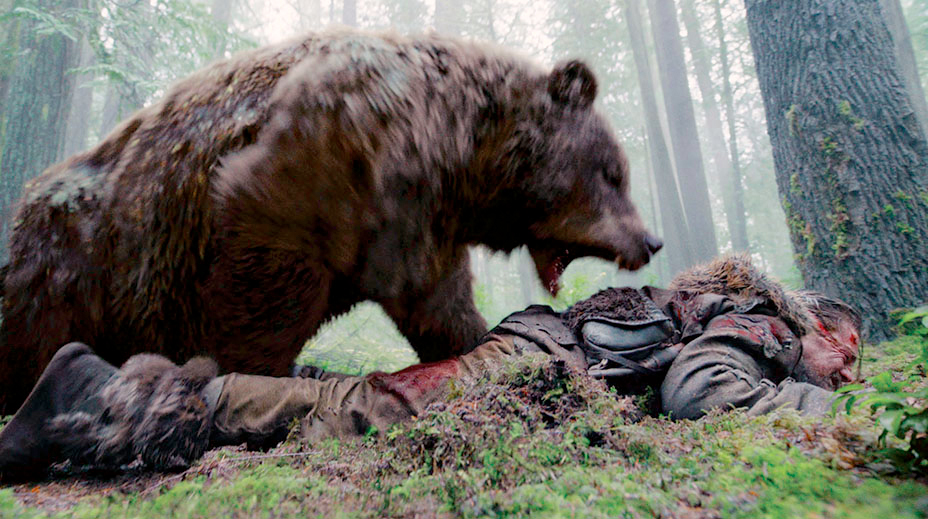
One of the most notorious and memorable scenes in the movie the when Hugh Glass is attacked by the grizzly bear, the scene is intense and violet, but worse than that this is an event which happened to the real-life protagonist. The scene was done entirely through stunt men and CGI, the actor was strapped to a harness attached to cables and yank around. The sound for the bear was created initially with real bear sounds and then combined with other animal noises and the mother bear was voice acted by the sound designer from The Revenant. He claims to of taken over 200 takes of him making grunts and roars for the mother bear, having on two being used.
The Revenant trailer highlights the difference in culture between the Natives and the European fur trappers, the trailer also does a good job portraying some of the conflicts. This is apparent in the first scene when the Natives attack the fur trappers camp site by the river.
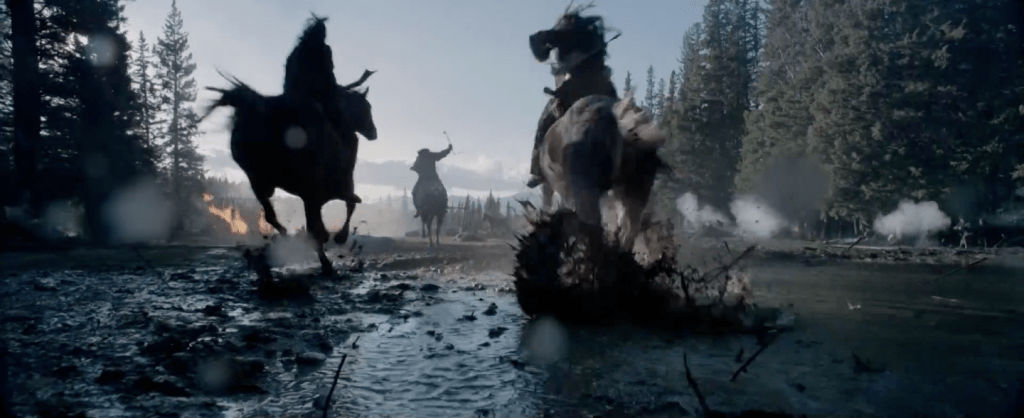
Representation plays a key part in the entire movie, yet its used heavily in the trailer to make the Native Americans seem like that’s who the audience should have a hatred towards as they attacked the campsite in the first scene of the trailer and the movie. This was a dangerous move as first impressions last and it could’ve easily been perceived as another American movie portraying the Native Americans as violet and aggressive during the 19th century colonization of the North America. Though as the trailer progresses we see that the original emotions felt by the audience are shifted towards John Fitzgerald, one of the men who left him for dead.
(2) Selected Trailer – Iron Harvest Official Cinematic
Opening Scene
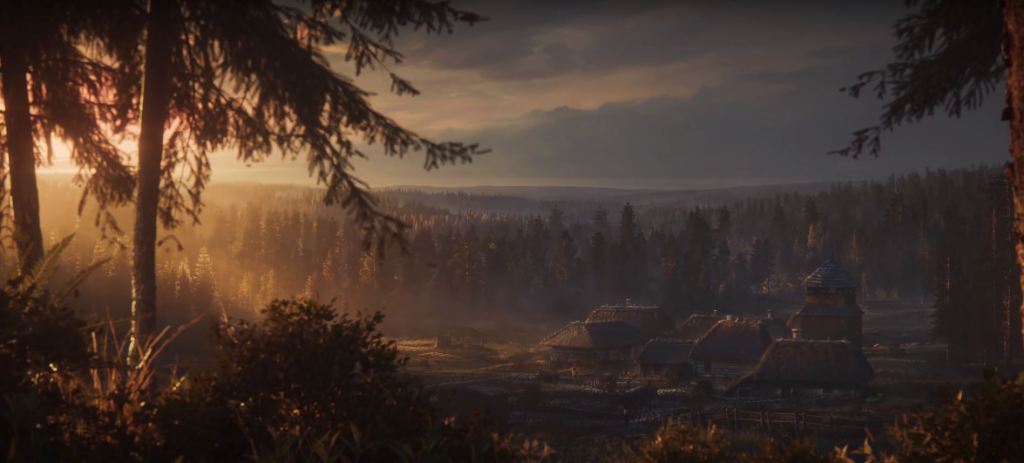
The trailer opens with a wide shot of a 20th century farming town, surrounded by a dense forest. This gave of the illusion that it was a peaceful town preparing for a harvest, as the name “Iron Harvest” would suggest.
To accompany this wide shot of the town, audio begins to play of a child singing as they’re playing with their toys in the grass. A gradual suspense begins to build as the music changes from peaceful to dark and eery, indicating that something bad is going to happen. The trees start swaying as if something inside the woods is ploughing through them, something unknown. When suddenly and explosion fills the street, covering it in a shroud of smoke, a group of soldiers emerge and begin to open fire on the civilians. Panicked the child runs into the forest but as the soldiers move closer to his position the music grows louder and louder – becoming more intense with each step they take. Sound plays a massive roll within the opening minute as its used to deceive the audience initially yet later places them right on the edge of their seat as they hopelessly watch.
As the boy runs deeper into the forest the audience begin to fear more and more for his safety as just a few scenes prior to this we saw most of the town get obliterated by the enemy fire and artillery, showing just how ruthless and relentless the soldiers seem to be.
The music cuts, as the boy bumps into resistance fighters, judging by their uniforms, who signal for him to be quite whilst also comforting him.
Foreshadowing is also present in the trailer as the child was playing with two different types of robots, pretending as if they were fighting each other, this scene happens later on in the trailer when the boy is saved and the battle commences, just as things are looking rough for his saviours the real life version of his toy appears Infront of him as it prepares to run into battle, buying them enough time to escape.
The screen cuts to black as a tree falls on top of the camera shot as the boys screams fade.
When the next shot appears, the boy is alone with his toy in a clearing having made it out of the forest. Its only when the audience see the fear in his eyes that the camera changes to the final cinematic shot that we see giant towering machines, way bigger than any seen before, patrol across a field, leaving it up to the audience to judge whether it’s over – or just beginning of an invasion. Either way the shot portrays just how hopeless the boy is compared to this diesel fueled monster.
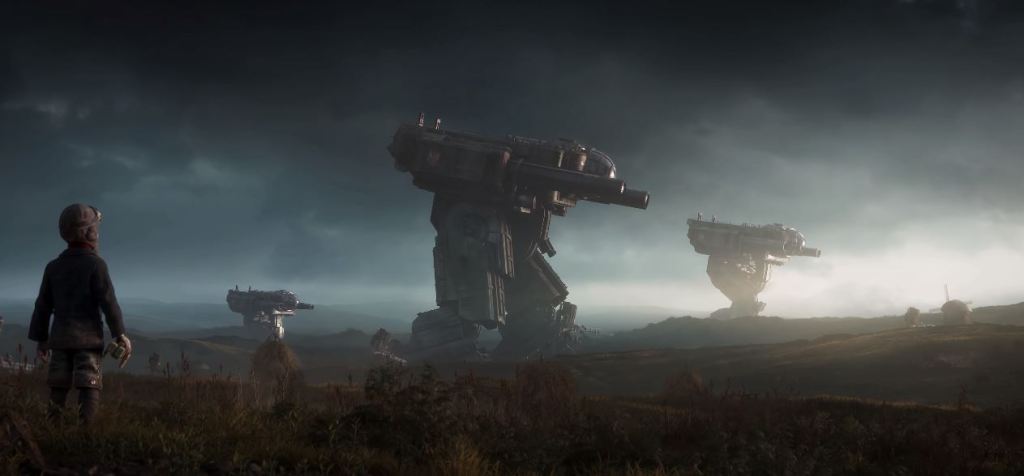
Putting the trailer into context
Iron Harvest is an alternative take on the history of the 1920s, taking inspiration from this time of industry change and progression, the fiction characters find themselves in the aftermath of the great war (World War One). Huge machines created to serve humanity, have only lifted warfare to another level and the “war to end all wars” has ended nothing.
When taking a closer look at the enemy soldiers who attacked in the trailer its clear that the developers planned to portray them as German soldiers. This becomes more apparent if the uniforms are compared.
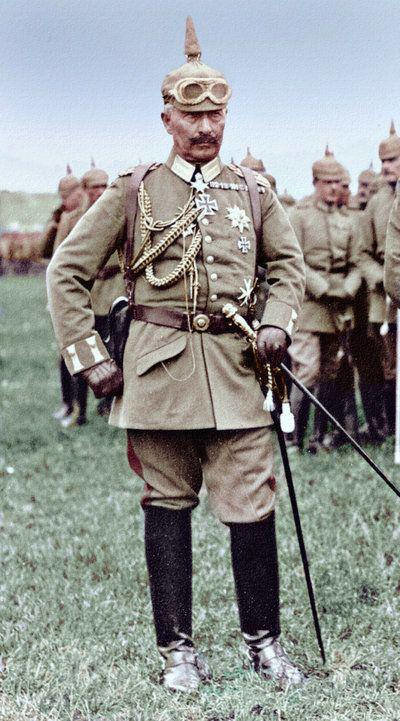
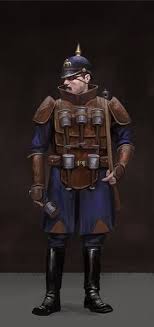
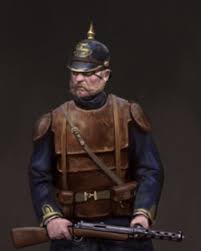
The Iron Harvest trailer represents the soldiers who are in German inspired uniforms, as being the aggressor and rendering them the enemy in the minds of the audience. This is much like the Germans in many WW1 films and games. Because of this it also makes the allies out as the saviors, as when they saved the fleeing little boy from the beginning.
(3) Selected Trailer – Battlefield V War in the Pacific.
The entire trailer is captured within game engine, it takes the player through some of the most iconic battles in the Pacific theatre as both American and Japanese forces. The trailer highlights all the different possible plays to play the game, whether you prefer the FPS ground based combat, driving tanks and boats or getting involved in dogfights above the island. All four ways to play the game come into one to create the ultimate battlefield experience. The trailer is used to hype up the games newest free content, adding new weapons, vehicles , character models and most importantly maps to fight on.
The beginning segment of the trailer shows both sides preparing to go into battle, we see the American landing craft moving in as the Japanese forces move out to defend the islands. Immediately the trailer spirals into the chaos of war with explosions, gun fire and screaming as they crawl up the beaches in land.
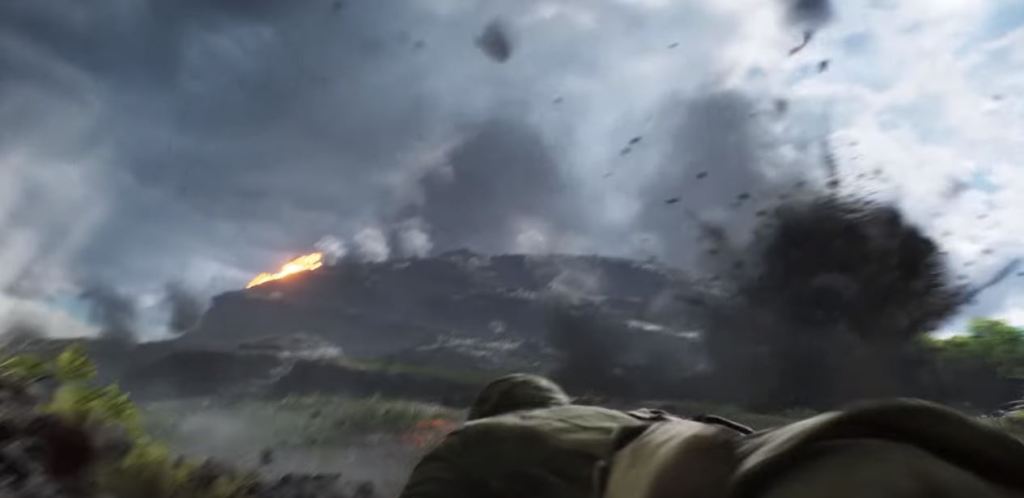
The game-play trailer makes sure to capture the vibrant colors of the pacific. The map developed by Dice is packed with color. The sea is crystal clear with cloudless skies, this is contrasted against the dark grey landing craft and battle ships, the vegetation is a blend of both bright green and dark greens with the occasional colored shrub. This gives of the illusion that the islands seem like the ultimate paradise. By the time the battle is underway the skies have darkened with smoke, gunfire and fire covering the landscape, creating a massive contrast. With the music from before being masked by the sounds of battle.
Color Schemes

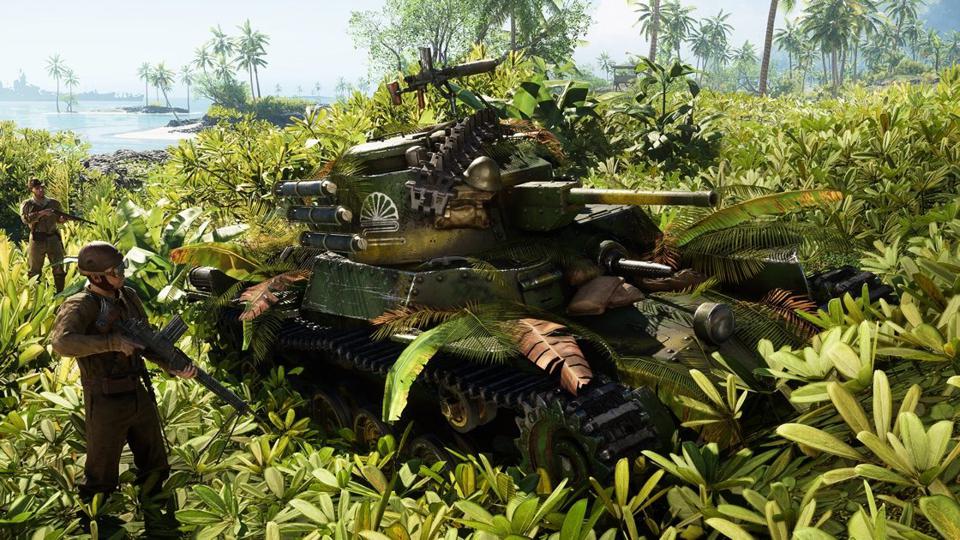
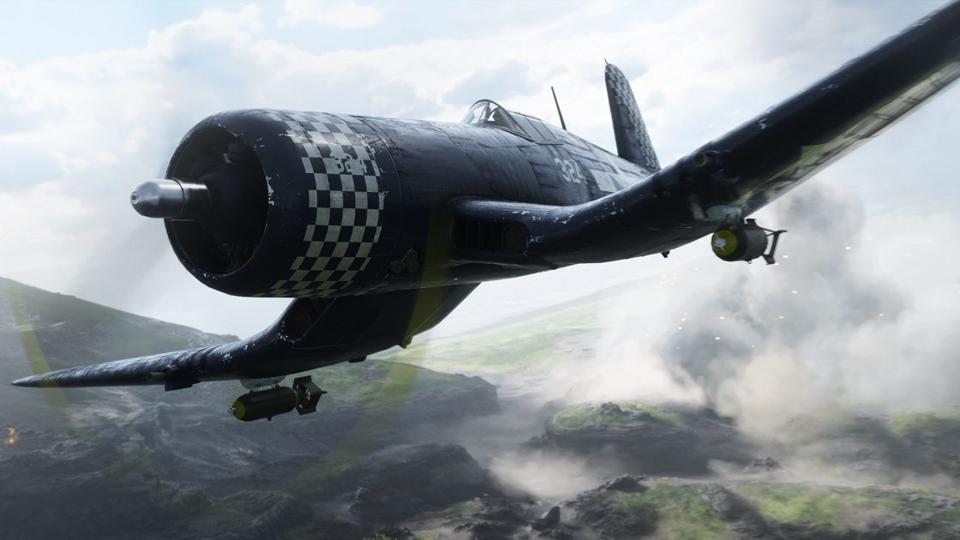
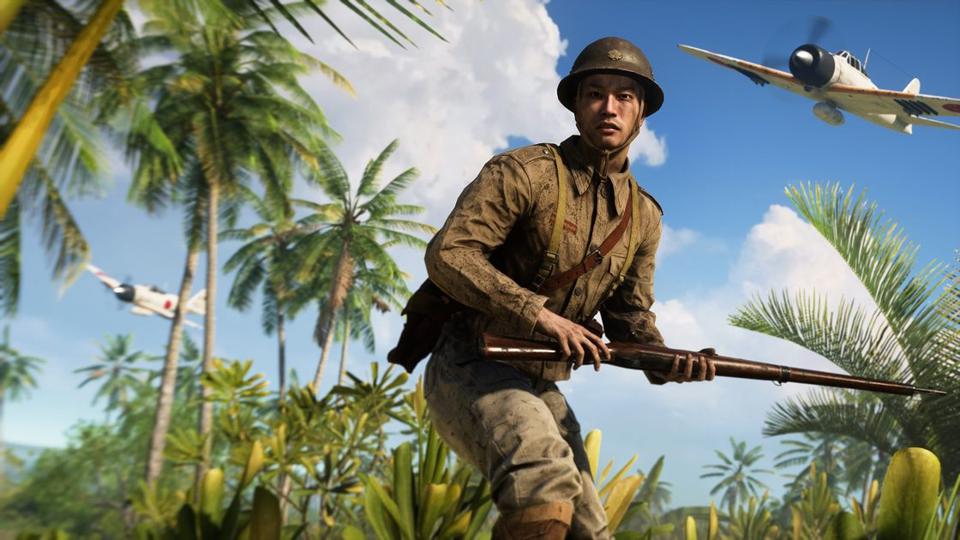
Although Battlefield is a game centered around the players experience and enjoyment, when it decides to set it newest installment in a historical time period it intends to be as historically accurate as possible – of course some things are stretched to keep the original statement true.
Set in 1945 Iwo Jima, an island in Japan, everything from the weaponry to the uniforms seem to be correct, when comparing images taken to screenshots from in game and the trailer.
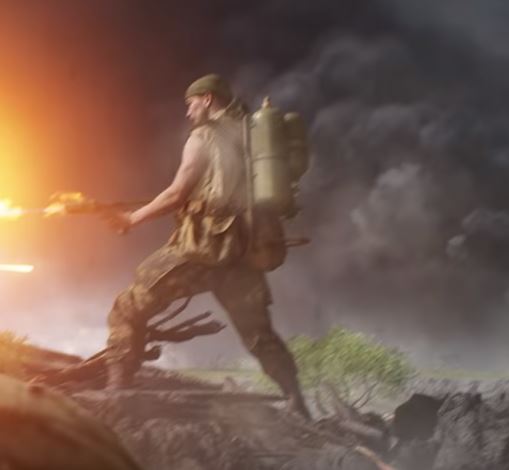
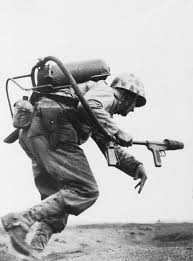
Battlefield trailers are renowned for its use of music, the music in the War in the Pacific trailer fits it perfectly, the slow build up fit seamlessly with the shots of the soldiers preparing for battle. Then as the song breaks into the chorus the game play and fighting kicks off.
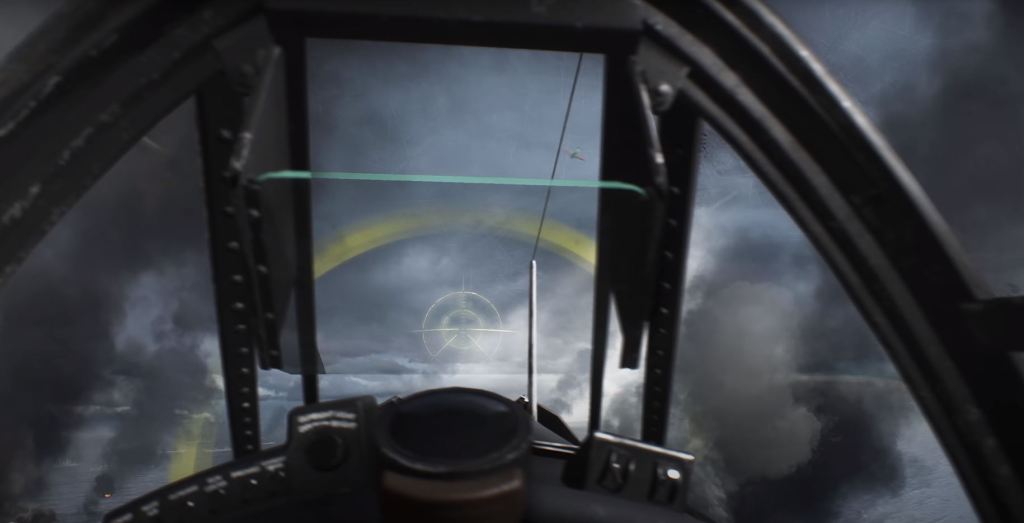
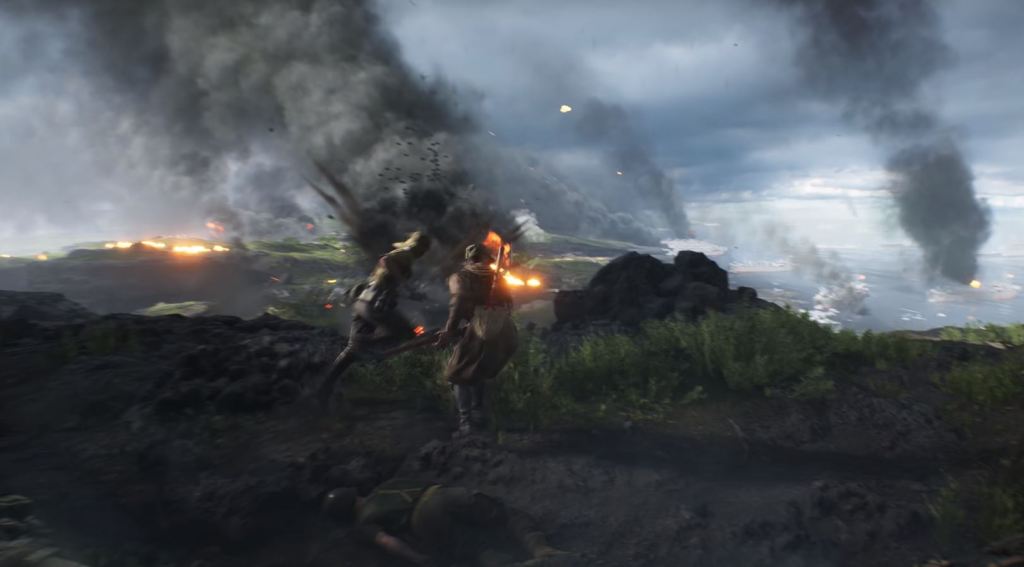
Even though the game play seen in this trailer is minimal it captures what the player will be experiencing by showing the point of view of the foot soldiers and the pilots, as seen here
Historical events
The trailer showcases the battles on Iwo jima in 1945 near the end of the second world war, this is when the United States Marine Corps and Navy landed on and eventually captured the island of Iwo Jima from the Imperial Japanese Army during.
A key historical photo was also taken during the final stages of the battle, its a photograph of six United States Marines raising the US flag atop Mount Suribachi.

 Finn's Blog